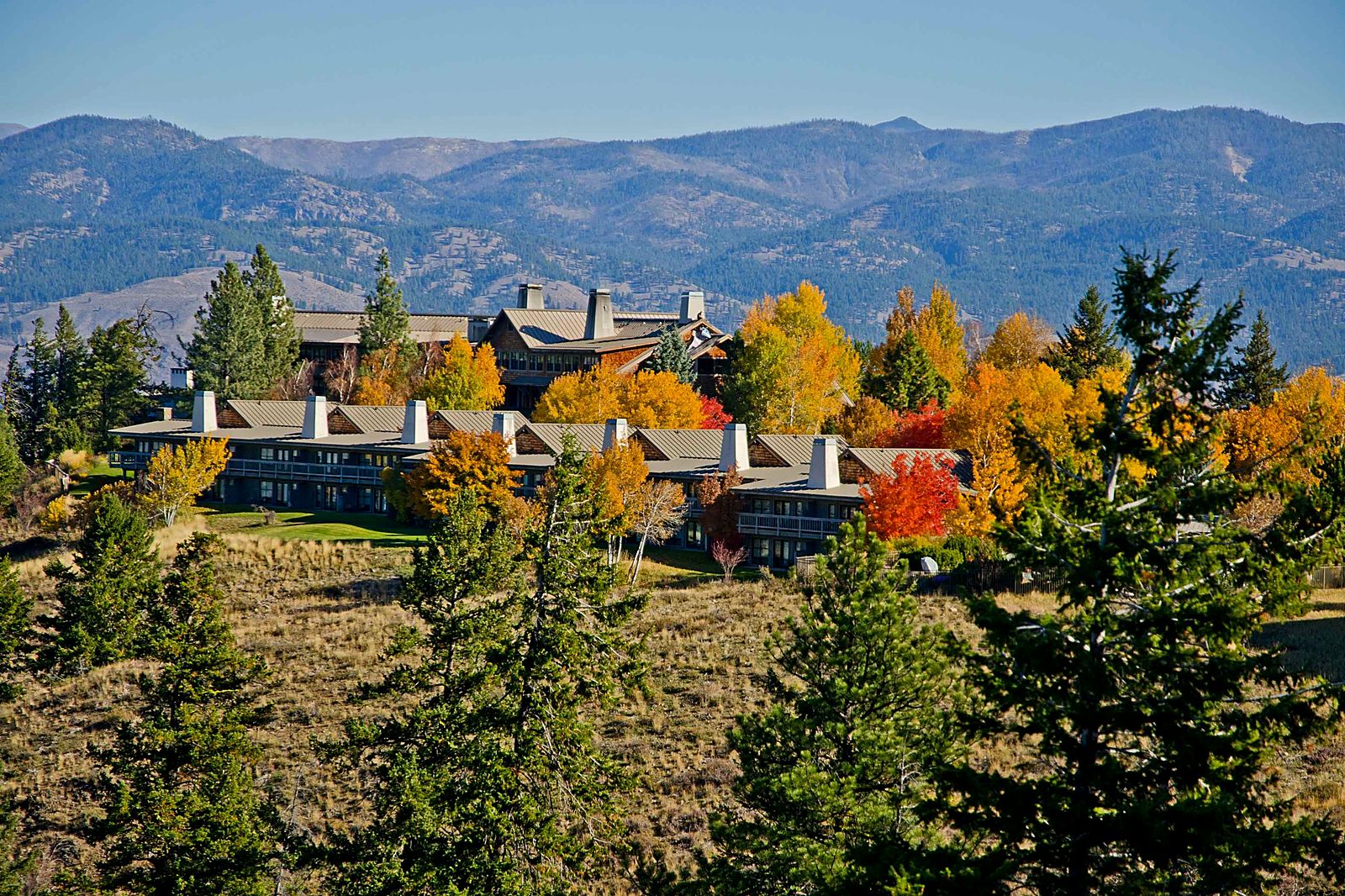
Every fall, something quietly extraordinary happens in the mountains above the Methow Valley. While the rest of Washington is turning the standard shades of red and orange, the subalpine forests near Winthrop ignite in a color that seems almost impossible for a conifer: pure gold.
The western larch is responsible. And if you have never planned a trip around larch season in the Methow Valley, 2026 is the year to start.
This guide covers everything you need: when the larches peak, which trails give you the best views, what to expect at different elevations, and and why the best larch season trips begin and end at Sun Mountain Lodge—hot tub, fire, and a glass of wine included.
For a few extraordinary weeks each fall, the North Cascades turn gold.
Welcome to Larch Season at Sun Mountain Lodge, one of the most magical times of year in the Methow Valley.
Every fall, the alpine larches of the North Cascades transform from green to brilliant shades of gold. The spectacle lasts only a few short weeks, creating what Pacific Northwest hikers affectionately call “Larch Madness.”
Stay at Sun Mountain Lodge, spend your days exploring some of Washington’s most spectacular fall hikes, then return to the mountain for dinner, a spa treatment, a fireside drink and a quiet evening overlooking the Methow Valley.
Early October (Oct 1 through Oct 10): Peak larch season. This is the window you want to plan around—check availability at Sun Mountain Lodge. Maple Pass, Blue Lake, and the Tiffany Mountain area are at their best. The color is most saturated, the light is golden in the mornings, and the contrast between the yellow larches and the blue October sky is at its most dramatic.
October in the Methow Valley is short, specific, and genuinely worth planning around. Golden larches on the ridges above the valley, clear October light, and the quiet that comes after the summer crowds have cleared—it is one of the better weeks the Pacific Northwest offers.
Sun Mountain Lodge makes it easy to get close to all of it. Guided trail rides on horseback take you through the larch forests at a pace that lets you actually look around. If you prefer boots on the ground, our guided hikes give you the same access with someone who knows exactly where the color is best.
Book our Drive & Discover package, stay 2 or more nights & receive $50 resort credit.
Most conifers are evergreen. The western larch is the exception. It is a deciduous conifer, which means it behaves more like a maple or an aspen than like a pine: every fall, its needles turn from green to a brilliant, almost luminous gold before dropping entirely.
The result is one of the most visually striking seasonal transitions in the Pacific Northwest. Larch trees grow in the subalpine zone, typically between 4,000 and 7,000 feet, mixed in among fir and spruce. When they turn, they light up the mountainsides like scattered torches against the darker evergreens. The Methow Valley has one of the highest concentrations of western larch in Washington, which is part of why this corner of the state has become the go-to destination for fall color.
On a clear October morning, looking up at a larch-covered ridge from the valley floor is one of those views that genuinely stops you mid-sentence—and Sun Mountain Lodge sits right in that valley, with those ridges visible from the property.
The Methow Valley sits at the eastern edge of the North Cascades, and its combination of elevation, terrain, and dry continental climate makes it one of the best places in Washington State to experience golden larch season. The trees are abundant, the trails are well-maintained, and the views extend far enough that you are not just looking at trees but at entire slopes of color set against rocky peaks and wide-open sky.
Mid-October (Oct 11 through Oct 20): This is the valley’s secret window. Fewer people on the trails, larches at lower elevations still turning, and a layered color show that runs from the high ridges all the way down to the river. Valley-floor aspens and cottonwoods are coming into color at the same time, which creates a depth of color that early October rarely delivers.
Late October and beyond: The high-elevation larches have dropped their needles, but the valley floor puts on its own show—cottonwoods along the Methow River, hillsides of oak and aspen, and a quietness that feels earned. Worth the trip if your schedule runs late.
One important note: Highway 20, the North Cascades Scenic Byway, can close as early as mid-October due to snowfall at Washington Pass. Check Washington State DOT conditions before your trip if you are planning hikes that require driving over the pass. The good news: most of the best larch trails in the Methow are accessible without crossing the pass, so guests staying at Sun Mountain Lodge are well-positioned regardless of highway conditions.
Distance: 7.2 miles | Elevation gain: 2,090 feet | Difficulty: Moderate to strenuous
This is the signature larch hike of the North Cascades. The loop takes you around Lake Ann and up to Maple Pass at 6,600 feet, where you are surrounded by larches on all sides with views of Rainy Lake below and Corteo Peak above. It is consistently ranked among the most beautiful hikes in Washington State, and in early October it earns that reputation.
Trailhead: Rainy Pass Trailhead, Highway 20 (approximately 50 miles from Sun Mountain Lodge). Arrive early—the parking lot fills by 8 a.m. on weekends during peak season.
Distance: 4.4 miles round trip | Elevation gain: 1,050 feet | Difficulty: Moderate
A shorter alternative to Maple Pass, and a better choice for anyone who wants lake views without a full-day commitment. Blue Lake sits in a rock bowl at 6,250 feet, and the larches along the upper trail are exceptional. The reflection of golden trees in the lake on a calm morning is the kind of photograph that makes people ask where it was taken.
Trailhead: Blue Lake Trailhead, Highway 20, just east of Washington Pass (approximately 48 miles from Sun Mountain Lodge).
Distance: 6.5 miles round trip | Elevation gain: 1,700 feet | Difficulty: Moderate
For hikers who want solitude, Tiffany Mountain is the answer. It sits northeast of Winthrop and sees a fraction of the traffic that Maple Pass does, but the larch groves on the upper slopes are just as impressive. You will likely have the summit to yourself on a weekday, with 360-degree views that include the Okanogan Highlands and the Cascades to the west.
Trailhead: Tiffany Spring Campground Road off Tiffany Lake Road (approximately 30 miles from Sun Mountain Lodge). A high-clearance vehicle is recommended for the final miles of the approach road.
Distance: Varies | Elevation: Approximately 6,200 feet at the pass
Harts Pass is the highest point accessible by road in Washington State, and the larch groves in this area are accessible even without a significant hike. Drive to the pass and walk the Pacific Crest Trail in either direction for stunning above-treeline views of golden larch forests below. For a more committed day, the hike to Slate Peak and its fire lookout adds context and elevation.
Access: Harts Pass Road off the Mazama Road (approximately 20 miles from Sun Mountain Lodge). Open seasonally; check road conditions.
If you would rather spend your time looking at the trees than navigating to them, Sun Mountain Lodge offers guided hikes through the larch forests during peak fall season. Our guides know where the color is best, which trails are worth the drive, and how to time the light for the best views. All experience levels welcome.
Book a Guided Hike or ask at the front desk when you check in.
Sun Mountain Lodge sits on 3,000 acres of private land above the Methow Valley, with views that stretch across the valley to the Cascade foothills in one direction and the Okanogan Highlands in the other. In fall, those views turn golden.
The lodge is positioned perfectly for larch season. It sits close enough to Winthrop and Mazama to reach every major trailhead within 30 to 50 minutes, and far enough from town to feel genuinely remote when you return in the evening.
A few things worth knowing for a larch season stay:
For photographers planning the trip around image-making, a few specifics:
Peak larch color in the Methow Valley typically falls between October 1 and October 15 each year. High-elevation hikes like Maple Pass and Blue Lake are usually at their best in the first two weeks of October, while lower elevations and valley-floor cottonwoods peak later in the month.
The lodge sits on a ridge above the Methow Valley, and the surrounding hillsides show fall color throughout October. The on-property trail system includes routes with views of the larch-covered ridges to the west. Guests do not need to drive to the high country to experience the season, though the alpine hikes are well worth the drive.
Western larches are deciduous conifers, meaning they turn gold and drop their needles once a year, which no other major conifer does. This creates a uniquely dramatic visual effect: a golden conifer set against dark green fir and spruce, rather than the leafy reds and oranges of a standard hardwood forest. The effect is most striking at high elevation where larches dominate entire ridgelines.
Absolutely. Maple Pass Loop is approximately 50 miles from Sun Mountain Lodge via Highway 20 and is widely considered one of the most beautiful hikes in Washington State during larch season. Plan an early start to beat the parking crunch, and check Highway 20 conditions before you go, as the pass can see early snowfall in October.
Blue Lake Trail (4.4 miles, moderate) is a good option for hikers who want high-elevation larch views without a full-day commitment. The drive to Harts Pass also provides access to impressive larch country with minimal hiking required. On the lodge property, the trail system offers fall color at more accessible grades.
October weekends at Sun Mountain Lodge fill 8 to 10 weeks in advance. If you are targeting the peak October 1 through 10 window, plan to book by early August. Weekday stays in early October offer the same color with better availability and less crowded trailheads.
Popular hikes in the Methow Valley include Cutthroat Lake, the Washington Pass Overlook, and the Maple Pass Loop nearby in the North Cascades. Trail conditions vary seasonally, so checking with local ranger stations or outfitters is recommended.
Larch season in the North Cascades is a short period in late September through October when alpine larch trees turn bright golden yellow at high elevations around the Methow Valley, especially near Washington Pass and the surrounding alpine trails.
The Methow Valley is a year-round destination. Summer is best for hiking, biking, and river activities, fall is known for larch season and foliage, and winter is popular for cross-country skiing. Spring is quieter with snowmelt and fewer crowds.
Sun Mountain Lodge is known for its panoramic views over the Methow Valley, direct access to hiking and Nordic skiing trails, and its elevated setting above Winthrop, Washington.
Yes—the Methow Valley is one of the top cross-country skiing destinations in the U.S., with groomed Nordic trails, snowshoeing, and winter mountain scenery, especially around Winthrop and Sun Mountain.
No—the North Cascades Highway (Highway 20) typically closes in winter due to snow, usually between November and April depending on conditions.
We look forward to welcoming you. (509) 996-2211
Get in Touch